






Handheld Ultrasound: The Complete Buyer's Guide (2026)
- 2026-10-27
- 32
- Guangzhou Sonostar Technologies Co., Limited
Handheld ultrasound moved from novelty to standard equipment in under a decade. A device that once required a dedicated room now weighs about the same as a smartphone and streams images to the phone already in your pocket. That shift changed what buyers need to know: the decision is no longer "can we afford ultrasound," but "which configuration answers the questions we actually ask, and what will it cost us over five years." This guide is the hub for that decision. Each section ends with a link to a deeper article on that specific topic.
What a handheld ultrasound actually is
A handheld ultrasound is a complete imaging system small enough to operate with one hand. The defining engineering point is that everything is inside the probe: the beamformer, the transmit/receive electronics, the battery, and the wireless transmitter. There is no base unit, no cart, and no proprietary display. The probe generates the image and sends it over Wi-Fi to a smartphone, tablet, or computer running the manufacturer's app.
That is why weight matters as a category marker. A typical wireless probe measures roughly 156 × 60 × 20 mm and weighs about 230 g — phone-sized, because the phone-class battery and electronics set the floor. Compare that with a laptop-style portable at two to six kilograms, or a cart console that needs its own outlet.
Two terms cause confusion and are worth separating now:
Handheld / pocket ultrasound — the probe itself is the machine. Roughly 200–300 g.
Portable ultrasound — an umbrella term covering handheld, laptop-style, tablet, compact, and cart-based portable units. Broader than handheld.
When someone quotes you a "portable" price, confirm which of those they mean. The difference can be tenfold. We break down all three in the laptop vs handheld vs cart comparison.
The three form factors, and what each gives up
No form factor wins outright. Each trades capability for mobility.
| Form factor | Weight | Display | Strength | Gives up |
|---|---|---|---|---|
| Handheld (wireless probe) | ~200–300 g | Your phone / tablet / PC | Goes anywhere; no capital room; lowest entry cost | Smaller acoustic aperture; battery-limited sessions |
| Laptop-style portable | 2–6 kg | Built-in screen | Better imaging than handheld; still transportable | Needs carrying; higher cost; fewer transducer ports |
| Cart-based console | 50 kg+ | Large integrated monitor | Highest image quality; multiple transducers; full measurement suites | Immobile; highest cost; needs a dedicated room |
The practical test is not image quality in the abstract — it is whether the device is present at the moment the clinical question arises. A cart system that stays in the imaging department cannot answer a bedside question. A handheld that lives in a coat pocket can. See the portable ultrasound range and the cart-based systems for how the middle and upper tiers compare.
Probe arrays: the single most important choice
The array determines what you can see. Everything else on a spec sheet is secondary to this.
Convex (curvilinear). Lower frequency, deeper penetration, wide field. The workhorse for abdomen, pelvis, FAST exams, and obstetric views. A typical convex probe on a wireless unit runs around 3.2/5.0 MHz with depth to 305 mm.
Linear. High frequency, shallow, high resolution. Required for vascular access, thyroid, breast, tendon, muscle, and nerve work. Around 7.5/10 MHz with depth to 80 mm.
Phased array. Small footprint, sector image. The only array that reliably fits between ribs, so it is what you need for cardiac windows, lung, and focused abdominal views. Requires spectral (PW) Doppler for flow assessment.
3-in-1. Convex, linear, and phased in one housing. Covers most point-of-care questions without swapping hardware.
Specialty arrays. Micro-convex, endocavity, biplane rectal, transvaginal, and 4D volume probes exist for specific workflows.
If you scan more than one body region, a 3-in-1 is usually the correct first purchase. If you do one thing at high volume, a dedicated single-array probe at a higher specification will outperform it. Full detail: types of ultrasound probes, the 3-in-1 wireless probe guide, and the phased array cardiac guide.

Specifications that matter — and two that sellers push
Some numbers on a spec sheet predict performance. Others are decoration. Here is the honest split.
Worth checking
Elements and channels. The most predictive spec on the sheet. More transmit/receive channels and more elements mean better lateral resolution. Within one product family you might see 128 elements / 32 channels at entry, 192 / 32 at mid-tier, and 192 elements / 64 channels at the top. If a quote omits these, ask.
Frequency range and depth per array. Stated per array, not per device.
Doppler modes. B, B/M, Color, Power Doppler (PDI), and spectral PW. PW is mandatory for any flow or cardiac work.
Battery design. A sealed cell is cheaper; a replaceable battery system with two cells supplied means no downtime mid-list. Typical wireless probes run roughly three hours continuous with wireless charging.
Ingress protection. A probe that can be rinsed (IP67-rated) matters for infection control in high-throughput settings.
Platform support. Which iOS, Android, and Windows versions — and the specific device list, not just the logo.
Less useful than they sound
Headline "MHz" numbers without context. A wide bandwidth figure means little unless paired with the depth and array it applies to.
Frame rate quoted in isolation. Meaningful only alongside depth setting and mode.
AI feature counts. Worth evaluating by whether your clinicians will actually use them, not by how many appear on the sheet.

Wireless, wired, and the display question
True wireless probes stream over Wi-Fi (typically dual-band 2.4 GHz and 5 GHz) to an app on your own device. Advantages: no cables to manage, easy cleaning, and the display device is one you already own and can upgrade independently. The trade-off is that image quality now depends partly on an app and a phone screen you did not buy from the ultrasound vendor.
Wired app-based probes avoid wireless latency and depend less on Wi-Fi conditions, at the cost of a cable. For high-volume interventional work where latency is felt, that trade is legitimate.
Either way, the display device is part of the system. Before buying, confirm: the exact phone or tablet models on the compatibility list, whether one licence covers iOS, Android, and Windows, screen readability in a bright room, and how images export. See the 2026 buyer's guide for how to weigh app and display quality alongside probe hardware.
What it costs
Two numbers matter: the sticker price and the five-year total.
| Band | Configuration | Typical price (USD) |
|---|---|---|
| Entry | Single array, 32 channels, B + Color | ~$1,500 – $3,000 |
| Mid | Dual-head or 3-in-1, 32–64 channels, PW | ~$3,000 – $6,000 |
| Premium ecosystem | Wide-band or dedicated arrays, AI, cloud | ~$5,000 – $10,000+ |
| Cart-based reference | Console plus multiple transducers | $9,000 – $25,000 |
Then the recurring layer. Several major brands sell hardware at or below cost and recover margin through an annual software membership that gates cloud storage, AI measurement tools, DICOM integration, or tele-ultrasound. Published third-party buyer guides reviewed in 2026 place these fees around $300–$500 per year, with multi-year prepay options. Over five years that can exceed the gap between two devices — which is why the crossover point, not the quote, is the number to calculate.
Full breakdown with a five-year worked example: how much a handheld ultrasound costs, and the no-subscription TCO guide.
Where handheld ultrasound is used
Adoption concentrates where the clinical question is binary and time-critical. Common settings include emergency and critical care (FAST, vascular access, cardiac windows), primary care and internal medicine, anaesthesia and pain procedures, musculoskeletal and sports medicine, obstetric point-of-care checks, urology and bladder volume measurement, and veterinary practice.
The pattern across all of them is the same: the device is valuable when it is already there. Most buyers who regret a purchase bought capability they did not need and overlooked portability they did. Detail by setting: which departments use portable ultrasound most and handheld ultrasound in emergency medicine.
Specialty configurations
Two categories deserve separate mention because they change the buying calculus.
Veterinary
Animal scanning imposes different constraints: species range from cats to cattle, hair and handling affect coupling, and the environment is harsher on equipment. Probe choice maps to animal size — higher-frequency linear for small animal superficial work, lower-frequency convex for large animal abdominal and reproductive imaging. If this is your use case, the requirements differ enough to warrant a dedicated guide: see the veterinary ultrasound range.
Bladder volume measurement
Automated bladder scanners turn a convex acquisition into a calculated volume, which removes operator variability from a measurement that drives catheterisation decisions. This is a genuine workflow tool rather than an imaging device, and it is evaluated differently — accuracy against catheterised volume, and time saved per scan. See the bladder scanner range and what clinical studies show about bladder scanner accuracy.
A six-step buying process
List your top three scan types. Not every scan you might do — the three you do most. This determines the array.
Decide specialty depth versus broad coverage. One array done well, or three arrays in one housing?
Fix the specification floor. Minimum channels, the Doppler modes you require, and the certifications your market demands.
Model five-year cost. Device plus any subscription plus warranty plus a replacement probe. Compare the crossover, not the quote.
Test on your own cases. Insist on a trial using your common scan types, with your staff operating. A vendor demo reel proves nothing about your workflow.
Get the software terms in writing. Whether the licence is perpetual, updates are free, and seats are unlimited — before payment, not after.
Sourcing: buying direct, OEM, and verifying a manufacturer
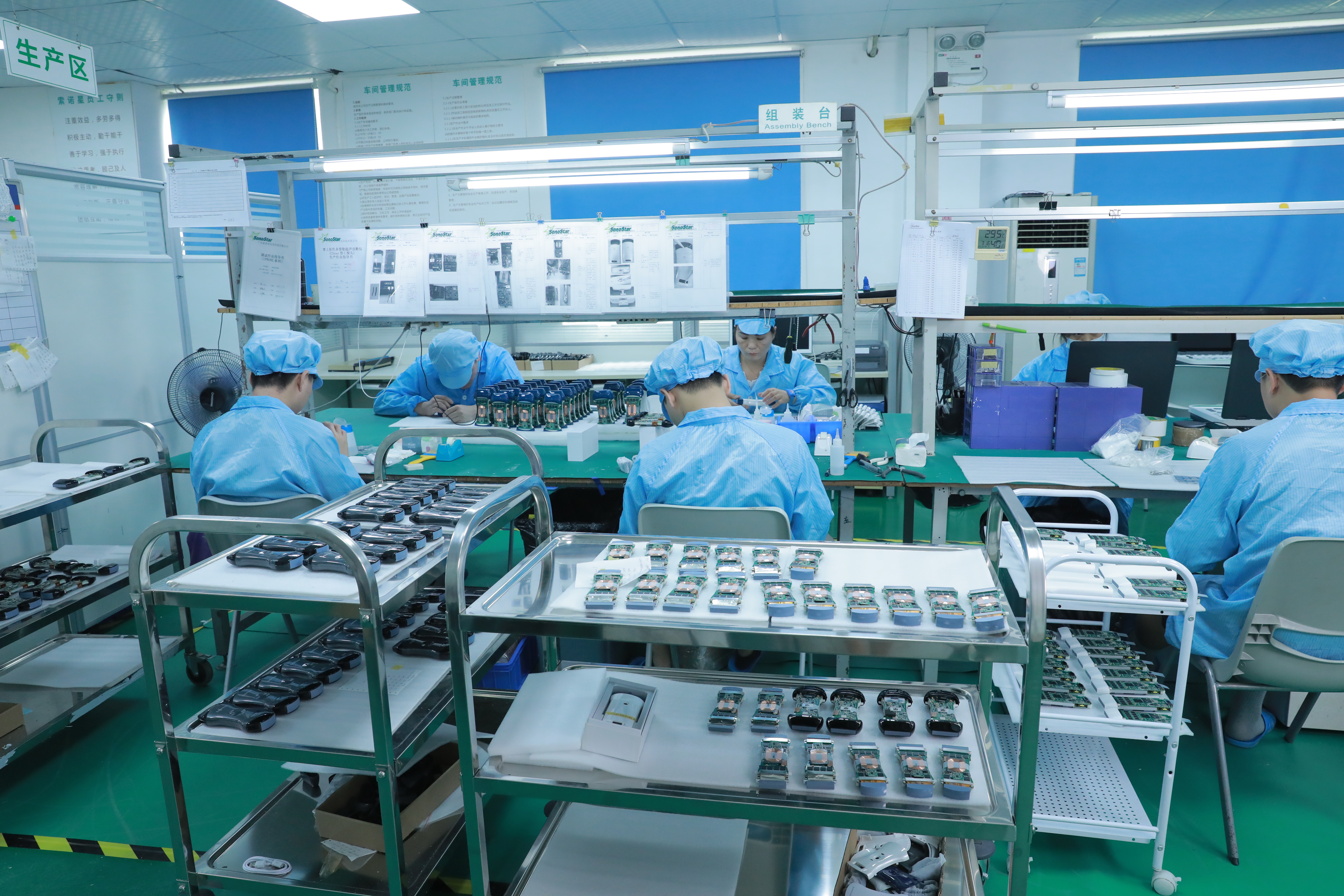
Much of the price spread in this market is channel, not hardware. A factory-direct purchase removes distributor margin; an OEM or private-label arrangement lets a distributor ship under its own brand. Both are legitimate and both require diligence.
Core checks: ISO 13485 quality-system certification, the actual FDA clearance or CE certificate numbers (not a claim of holding them), production capacity, whether they manufacture their own probes or assemble bought-in units, and what after-sales looks like in your region. Start with how to choose and verify a manufacturer and the OEM/ODM private-label guide.
Training is part of the purchase
Acquiring an image is learnable in an afternoon. Interpreting it is not. Every serious clinical body treats point-of-care ultrasound as a competency requiring structured training and supervised practice — not a skill that arrives with the device. Budget for training alongside hardware, and treat any vendor who suggests otherwise as a warning sign.
If you are starting from zero, begin with how to use a handheld ultrasound: a POCUS beginner's guide.
Where SonoStar fits
Stated plainly so you can weigh it against everything above:
Manufacturer-direct. SonoStar builds its own wireless probes, so comparable specifications sit at the lower end of each price band.
No recurring software fee. The imaging app and updates come with the device rather than being billed annually.
Certifications on file. FDA clearance K211321, CE marking (CE 2862), ISO 13485.
Array coverage. Convex, linear, phased, micro-convex, endocavity, biplane, 3-in-1, and 4D configurations, plus a 4D wireless bladder scanner line.
The honest limitation. A smaller brand ecosystem than the largest global names. If your decision is driven by institutional AI tooling, cloud credentialing, or multi-site QA infrastructure, the large ecosystems may justify their premium. That is a real trade-off, not a talking point.
Explore the wireless handheld lineup
Convex, linear, phased, and 3-in-1 wireless probes — factory-direct, with the software model stated in writing.
Frequently asked questions
What is a handheld ultrasound?
A complete ultrasound system small enough to hold in one hand — typically a wireless probe containing the beamformer, battery, and transmitter, streaming images to a phone, tablet, or computer. No cart or dedicated display required.
Can a handheld ultrasound replace a full machine?
For focused point-of-care questions, often yes. For comprehensive diagnostic imaging, generally not. Handheld devices excel at fluid detection, vascular access, bladder volume, and basic cardiac windows. Detailed abdominal, obstetric, or vascular studies still favour a cart-based system.
Which probe array should I buy first?
Convex if your work is abdominal or pelvic. Linear if it is vascular access, superficial, or musculoskeletal. Phased if it is cardiac or lung. If you do more than one of those, a 3-in-1.
How much does a handheld ultrasound cost?
Entry single-array units run roughly $1,500–$3,000, 3-in-1 units $3,000–$6,000, and premium ecosystems $5,000–$10,000+ before subscription. Cart systems are $9,000–$25,000. Compare five-year totals, not quotes.
Do handheld ultrasound devices need a subscription?
Some do. Butterfly, GE, and Clarius gate certain cloud, AI, or workflow features behind membership plans. Several wireless probe manufacturers — including SonoStar — supply software with the device. Always get current terms in writing.
Is training required?
Yes. Image acquisition is quick to learn; interpretation requires structured training and supervised practice. Budget for it alongside the hardware.
Continue reading — the handheld ultrasound cluster
How much does a handheld ultrasound cost? 2026 price breakdown
Types of ultrasound probes: convex vs linear vs phased array
Phased array handheld ultrasound: a practical cardiac POCUS guide
Handheld ultrasound with no subscription fee: the TCO buyer's guide
Bladder scanner accuracy: what clinical studies actually show
Handheld ultrasound OEM/ODM: private label and customization
Specifications, price bands, and brand descriptions reflect public reference information and manufacturer product pages reviewed in 2026 and are subject to change. Competitor references are general category comparisons and are not clinical endorsements. This article is educational information about medical device procurement, not medical advice. Clinical use of ultrasound requires appropriate training and must follow local licensing, scope-of-practice, and regulatory requirements; confirm current specifications, certifications, and pricing with the manufacturer before purchase.
- Pre:Bladder Scanner Accuracy: What Clinical Studies Actually Show
- Next:No more


 Home
 Product
 News
 Contact